
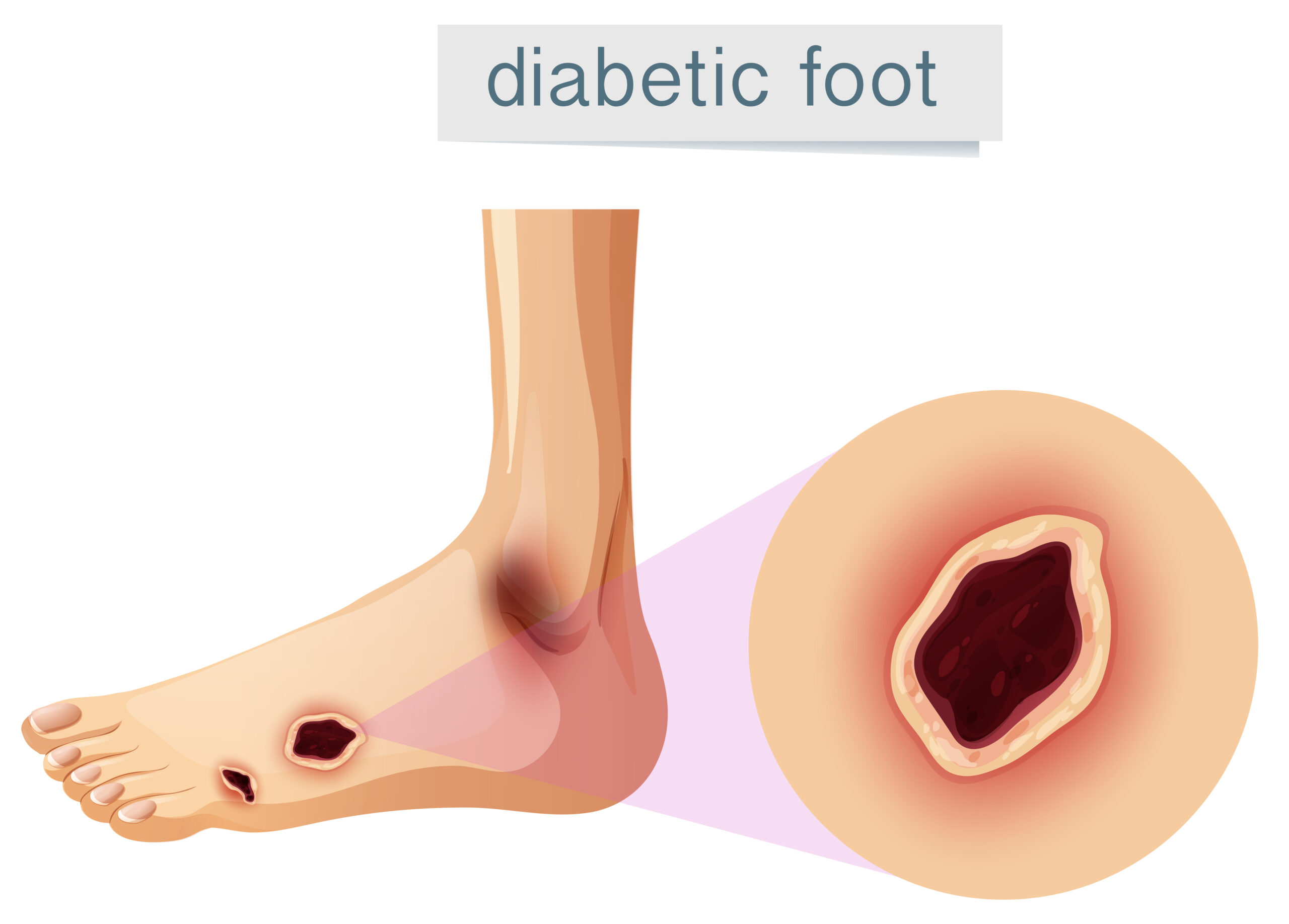
What is Diabetic Foot?
Diabetic foot is a serious complication of diabetes. It happens when high blood sugar damages nerves and blood vessels in the feet. As a result, people with diabetes may not feel pain or notice injuries. Because of this, small cuts or blisters can turn into bigger problems. Early awareness of diabetic foot is important. It helps prevent infections and other severe issues. Diabetic foot care is key to staying healthy and active.
Common Symptoms of Diabetic Foot
Recognizing diabetic foot symptoms early can help prevent complications. Watch for these signs:
If you notice any of these diabetic foot symptoms, act quickly. Early treatment for diabetic foot can prevent serious problems.
Causes and Risk Factors
Several factors can lead to diabetic foot complications. High blood sugar over time damages nerves (called neuropathy) and blood vessels. Because of this, the feet may not get enough blood or feel pain. Other risk factors include:
For example, people with nerve damage may not notice a blister. However, without proper diabetic foot care, this can become infected.
How Diabetic Foot is Diagnosed
Doctors use several methods to diagnose diabetic foot. First, they will ask about your symptoms and medical history. Then, they will examine your feet for wounds, redness, or swelling. Often, they check for feeling using a small tool. Blood tests may show how well your diabetes is controlled. Sometimes, doctors use imaging tests like X-rays to look for bone problems. Early diagnosis helps prevent diabetic foot complications.
Treatment Options for Diabetic Foot
Treatment for diabetic foot depends on the problem. However, the main goals are to heal wounds, prevent infection, and improve blood flow. Common treatments include:
With proper care, many people recover well. Still, following your doctor’s advice is important for diabetic foot care.
Prevention Tips and Lifestyle Guidance
Preventing diabetic foot complications is possible. Try these simple steps every day:
By following these tips, you can lower your risk of diabetic foot problems. Preventing diabetic foot complications is easier than treating them.
When to See a Doctor
Sometimes, foot problems need quick medical attention. Contact your doctor if you notice:
Early treatment for diabetic foot can prevent serious issues. Do not wait if you see any of these signs.
Conclusion
In summary, diabetic foot is a serious but preventable complication of diabetes. With good diabetic foot care and regular check-ups, you can stay healthy. If you notice any symptoms, consult a specialist at Guru Nanak Hospital for personalized guidance on diabetic foot care.